
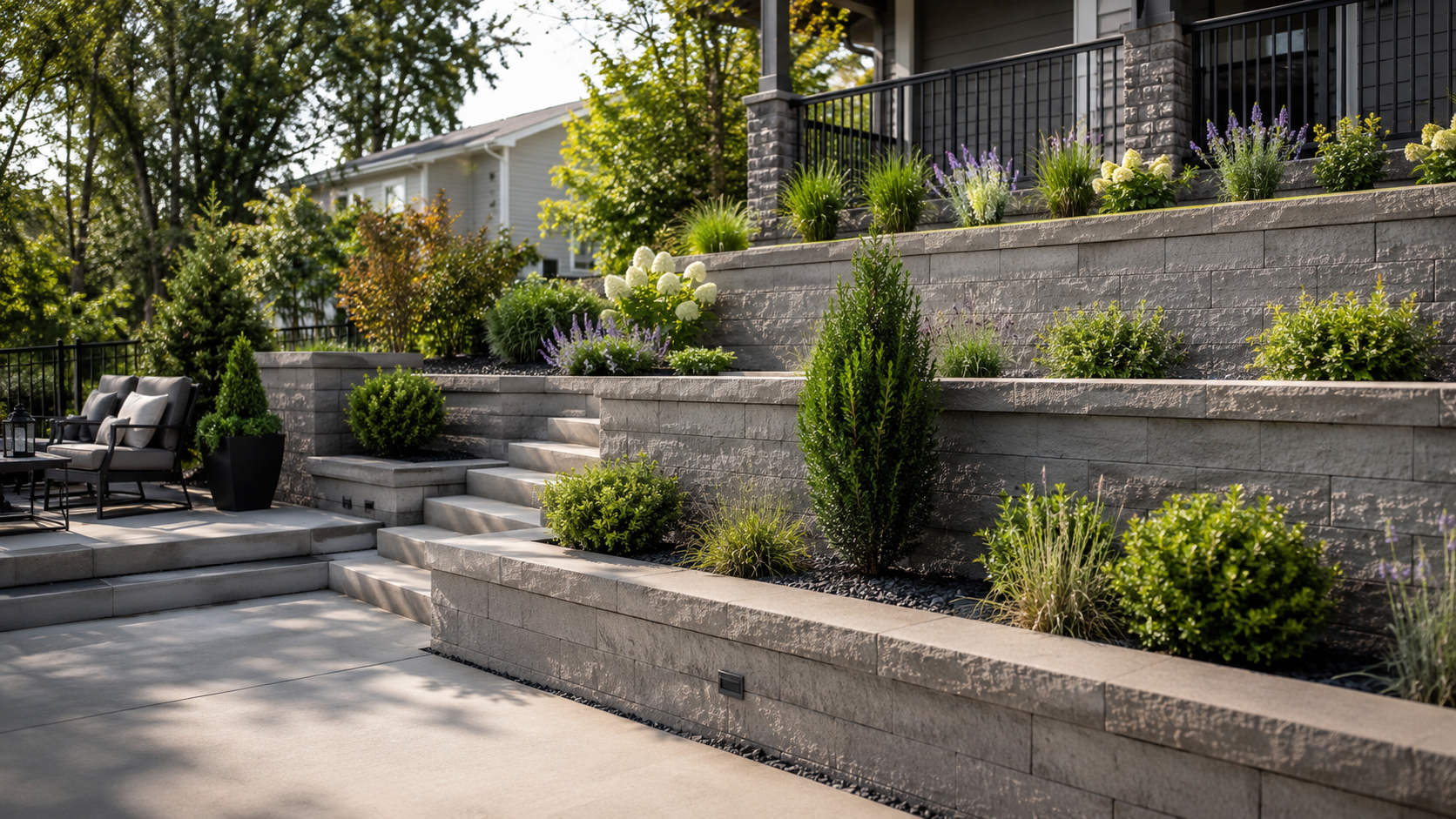
Concrete Retaining Walls Built for KC Clay Soil
LS Concrete Contractors builds concrete retaining walls for residential properties in Lee's Summit and the Kansas City metro. A retaining wall on Lee's Summit clay soil is only as good as its drainage design — walls without proper drainage behind them fail reliably.
Free Estimate
Tell us about your project.
Same-day response. No obligation.
The Finished Project
A retaining wall that holds grade and drainage on KC clay.
A concrete retaining wall turns a sloped, eroding yard into defined, usable space. With proper drainage built into the wall from the start, it holds without hydrostatic pressure failure — and gives the landscape the structure it needs to stay put on KC's expansive clay.
Residential
What Concrete Retaining Wall Installation Covers
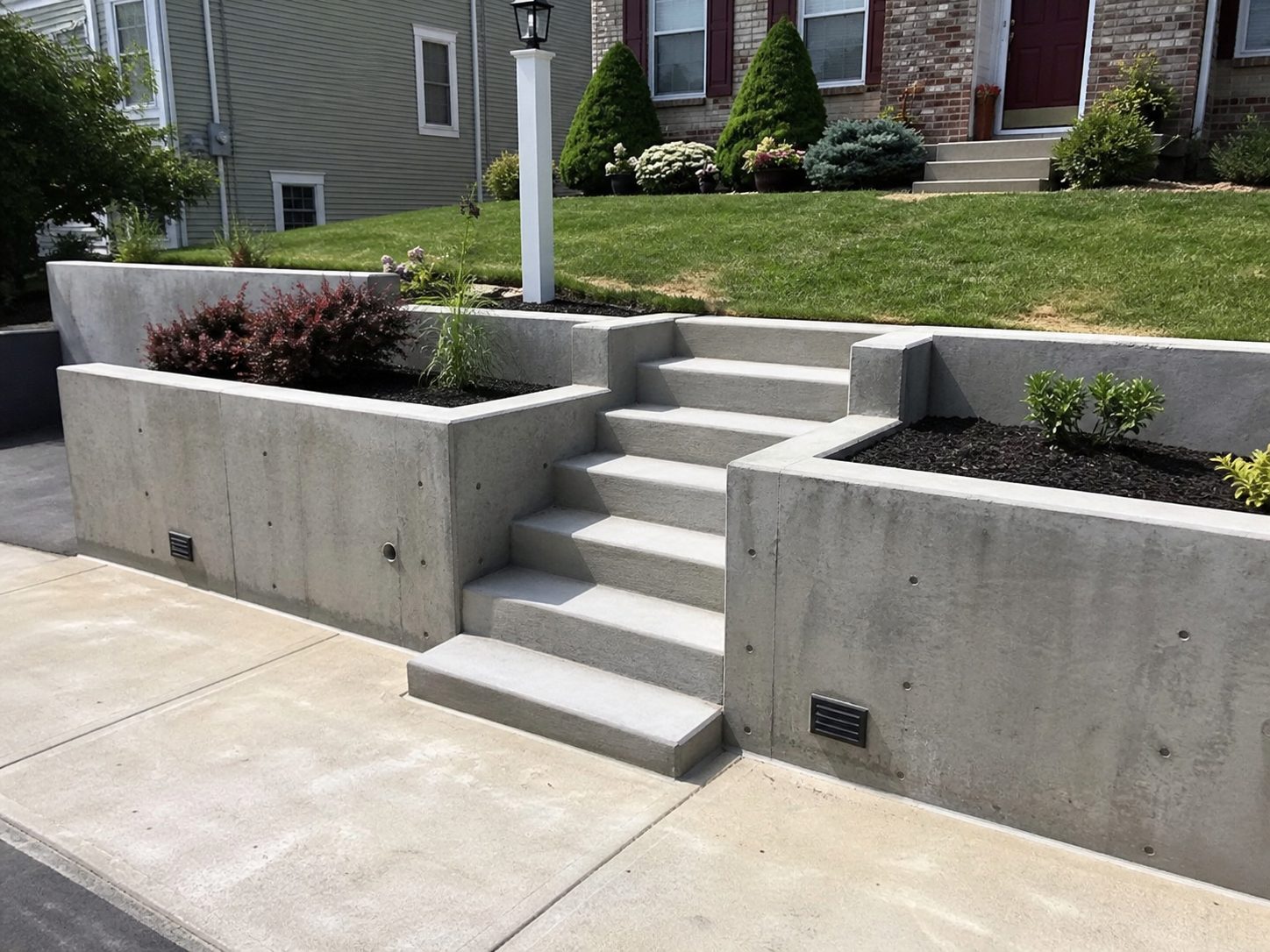
Retaining walls manage grade changes, prevent erosion, redirect drainage, and create usable flat areas on sloped residential lots. In Lee's Summit, clay soil puts substantial lateral pressure on wall systems — particularly when that soil is wet and swollen. A wall that doesn't account for the drainage behind it will fail from hydrostatic pressure, often within 2–4 years.
We build poured concrete retaining walls for residential properties, tiered wall systems for significant grade changes, and low walls for landscape features and drainage management. We scope walls with drainage as a primary design element, not an afterthought.
Common Situations
What Problems Does a Retaining Wall Solve on a KC Property?
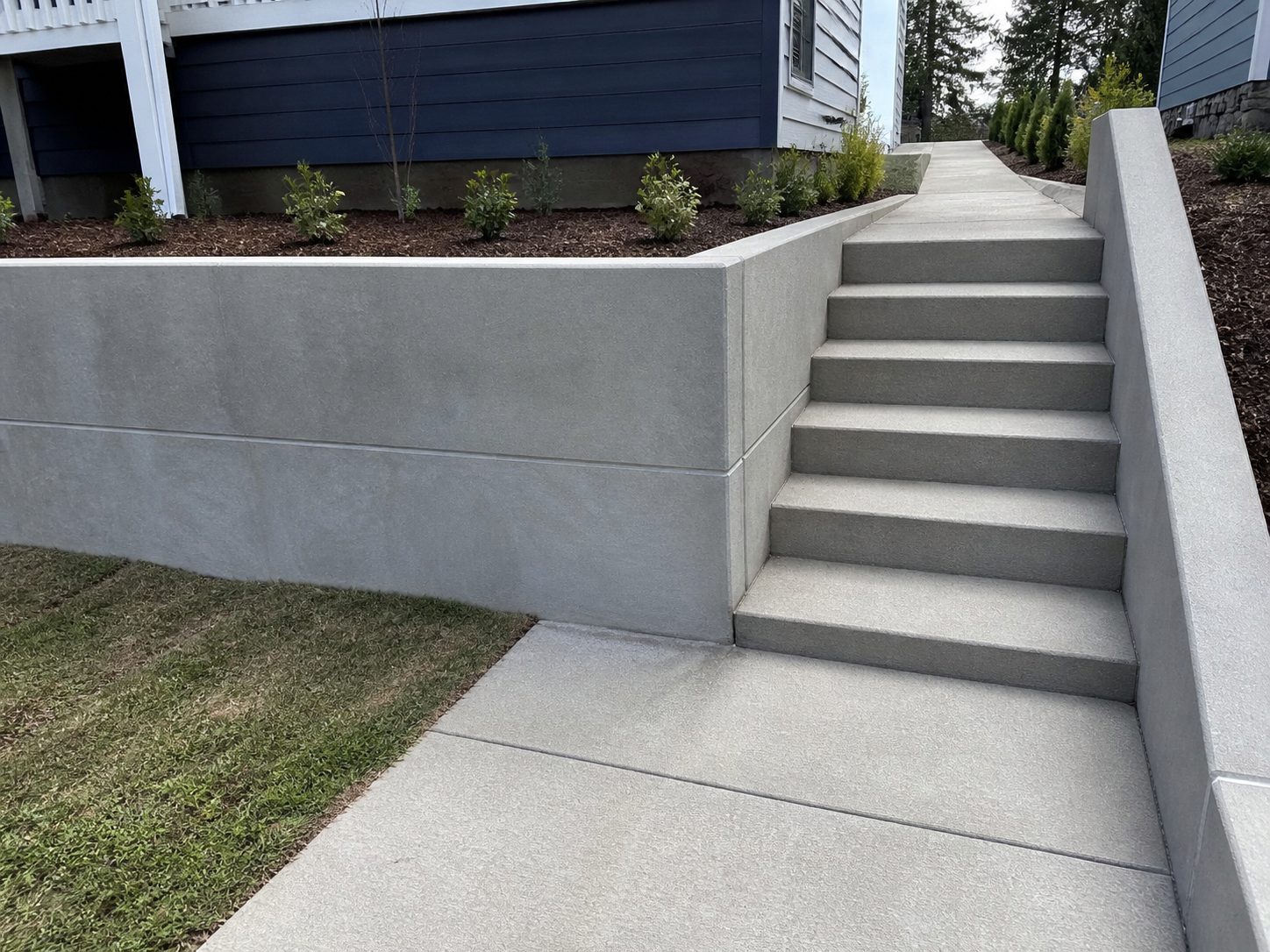
- › Sloped backyard or side yard with erosion or runoff problems
- › Grade change at a property edge or between neighbor lots
- › Driveway cut creating a slope that needs support
- › Creating flat outdoor living space from a sloped lot
- › Directing drainage away from the foundation on a sloped lot
- › Replacing a failing block, timber, or existing concrete wall
Technical Factors
What Determines Whether a Retaining Wall Holds Long-Term
Drainage Behind the Wall
Hydrostatic pressure from water-saturated soil is the primary cause of retaining wall failure. Gravel backfill and weep holes in the wall face let water escape rather than build pressure.
Footing Depth and Width
Wall footings need to extend below the frost line to prevent heave, and be wide enough to distribute the wall load. Walls poured without proper footings move over time.
Reinforcement
Taller walls require rebar. The reinforcement schedule depends on wall height, soil conditions, and surcharge load (what's on top of the retained soil — vehicles, structures, etc.).
Batter and Geometry
A slight backward lean (batter) into the retained soil adds stability. The geometry of the wall system matters as much as material strength for walls over 3 feet.
Lee's Summit / KC Context
How Lee's Summit Clay Soil Affects Retaining Wall Design
Expansive clay imposes more lateral pressure on retaining walls than sandy soils because it holds water longer and swells more dramatically when saturated. We've seen block retaining walls on residential properties fail within 3 years because the gravel drainage layer behind the wall was missing or inadequate. Poured concrete walls are more durable than block or timber in these conditions, and we always include proper drainage design in the scope — it's not optional on KC clay.
Pricing
How Much Does a Concrete Retaining Wall Cost in Lee's Summit?
Poured concrete retaining walls in the KC metro typically run $25–55 per linear foot for 3–4 foot walls, including footings, drainage aggregate, weep holes, and backfill. Taller walls (5+ feet) require engineered design and may require permits. Block retaining walls are generally less expensive for shorter runs but less durable on expansive clay soil.
- › Wall height and linear footage
- › Footing depth required (frost line compliance)
- › Drainage design behind the wall (gravel, drain tile)
- › Engineered design requirement (walls 4+ ft)
- › Permit requirements (varies by city)
- › Backfill and site restoration
What We Handle
Common Retaining Wall Applications in Lee's Summit
Grade Change Management
Managing significant elevation changes on residential lots — particularly where the grade drops sharply from the house toward the yard or from the street toward the property.
Erosion Control
Stabilizing slopes that lose soil in rain events. Walls interrupt the slope, reduce runoff velocity, and prevent the ongoing erosion that damages landscaping and exposes roots.
Drainage Diversion
Redirecting surface water away from the foundation by creating a barrier and controlled drainage path. Often combined with grading work and drainage tile.
Landscape Terracing
Tiered walls that create flat planting beds or lawn areas on sloped lots. Multiple shorter walls are often more stable and more visually appealing than a single tall wall.
Driveway Edge Support
Supporting the grade adjacent to a driveway cut — particularly where the driveway is elevated relative to the yard or neighbors the slope directly.
FAQ
Common questions about this service.
If your question isn't here, call us. We'll give you a direct answer.
(816) 608-7761How tall can a concrete retaining wall be?
What causes retaining walls to fail?
Do I need a permit for a retaining wall in Lee's Summit?
Can you build a retaining wall where one is currently failing?
How long does a concrete retaining wall last?
Service Areas
Retaining Walls across the eastern KC metro.
We handle retaining walls in Lee's Summit and 11 surrounding cities. Each location has the same base-prep standards and KC-specified mix design.
Lee's Summit
Jackson County
Retaining Walls in Lee's Summit →Kansas City
Jackson / Clay / Platte Counties
Retaining Walls in Kansas City →Independence
Jackson County
Retaining Walls in Independence →Grain Valley
Jackson County
Retaining Walls in Grain Valley →Raymore
Cass County
Retaining Walls in Raymore →Belton
Cass County
Retaining Walls in Belton →Grandview
Jackson County
Retaining Walls in Grandview →Pleasant Hill
Cass County
Retaining Walls in Pleasant Hill →Harrisonville
Cass County
Retaining Walls in Harrisonville →Blue Springs
Jackson County
Retaining Walls in Blue Springs →Oak Grove
Jackson County
Retaining Walls in Oak Grove →Odessa
Lafayette / Jackson Counties
Retaining Walls in Odessa →Related Services
Other concrete work we handle.
Residential
Concrete Driveways
What Concrete Driveway Installation Covers in Lee's Summit
See details →Residential
Sidewalks & Walkways
What Concrete Sidewalk Repair and Installation Covers
See details →Commercial
Foundations & Sitework
What Concrete Foundation and Sitework Covers in Lee's Summit
See details →