Warehouse & Industrial Concrete Floors in Lee's Summit & KC Metro
LS Concrete Contractors pours warehouse and industrial concrete floors for commercial and light industrial properties in Lee's Summit and the Kansas City metro. Floor concrete for warehouse operations requires slab thickness, mix design, and flatness tolerances matched to how the space will actually be used.
Free Estimate
Tell us about your project.
Same-day response. No obligation.
The Finished Project
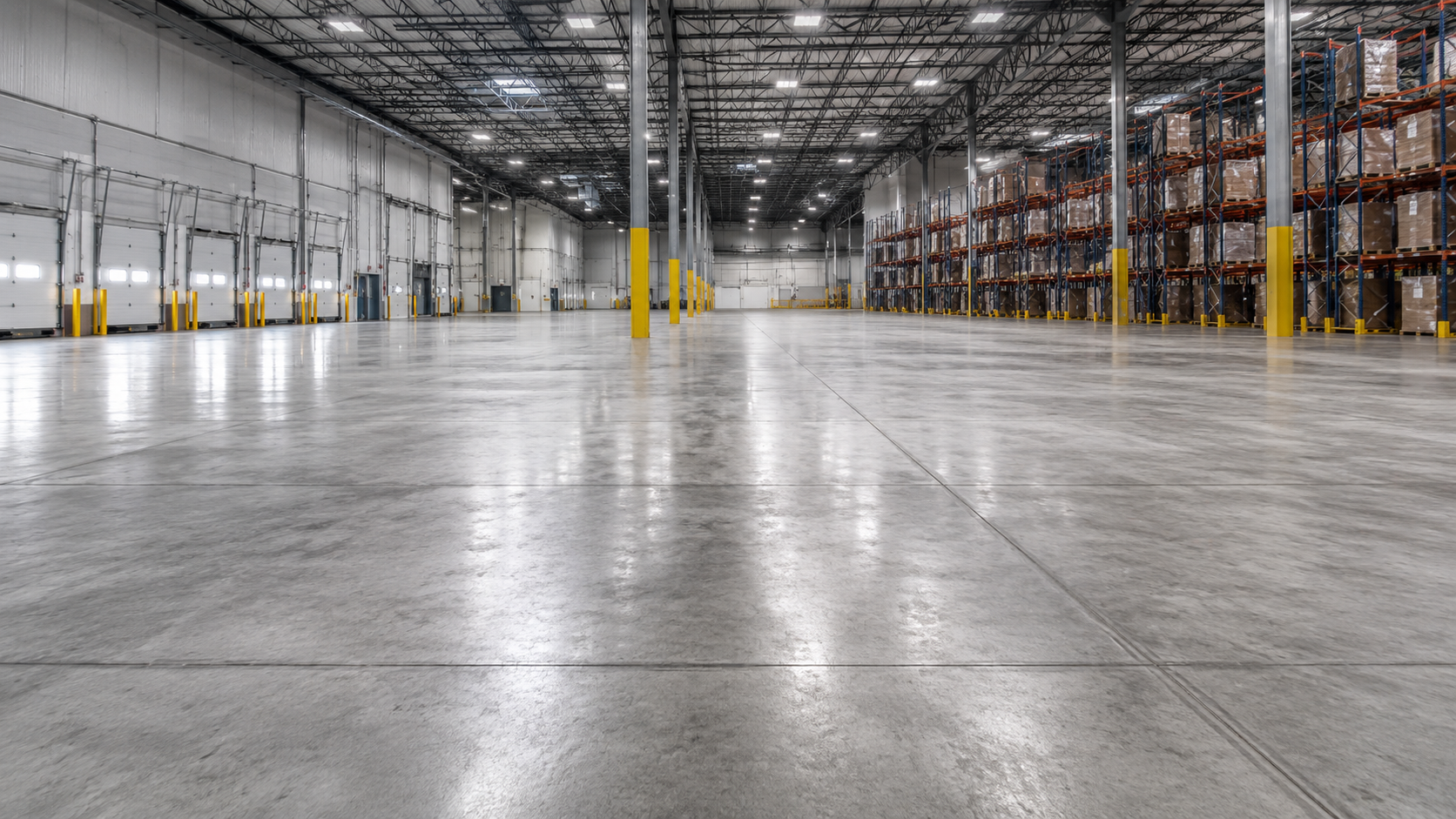
A warehouse floor that handles operations without maintenance interruptions.
A warehouse or industrial floor that's flat, properly jointed, and specified for your actual traffic loads makes daily operations easier and reduces equipment wear. Getting the spec right before the pour — slab thickness, PSI, reinforcement, surface treatment — is what creates a floor that actually works for your space.
Commercial
What Warehouse and Industrial Floor Concrete Covers
A warehouse or industrial floor handles forklift traffic, pallet jack loads, racking anchors, and continuous vehicle movement in ways that exceed residential or light commercial concrete specifications. Slab thickness, PSI rating, reinforcement, surface hardener, and flatness tolerance are all design decisions that affect how the floor performs under your specific operations.
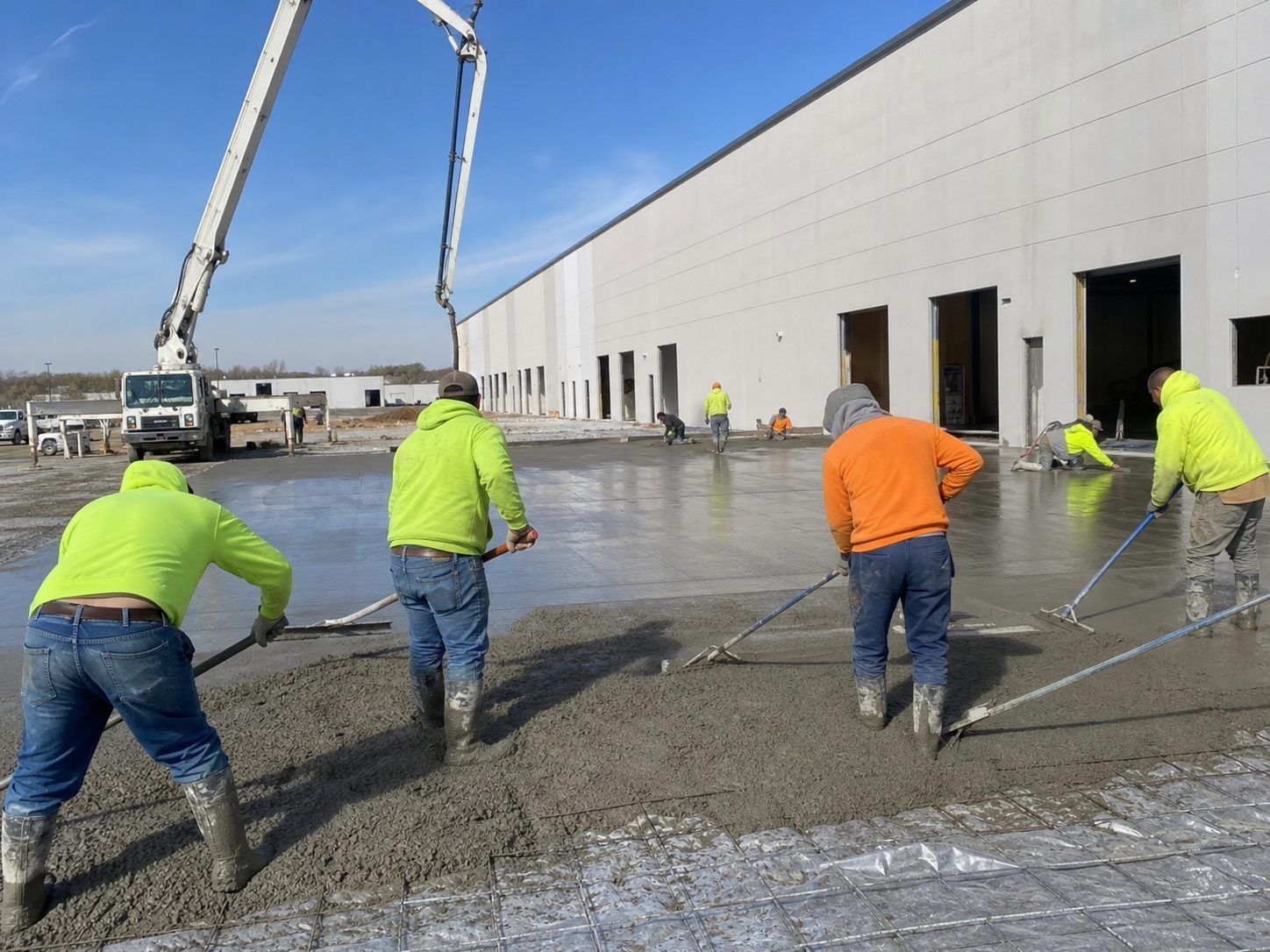
We pour new floors for warehouse, logistics, light manufacturing, and storage facilities. We also handle partial floor repairs and resurfacing for existing facilities where sections have deteriorated or where surface quality is affecting operations.
Common Situations
When Do Warehouse Operations Need New Concrete Flooring?
- › New warehouse or distribution center construction requiring a slab-on-grade
- › Existing floor is cracking, spalling, or showing joint deterioration under load
- › Converting a space from one use to another requiring a floor upgrade
- › Adding a dock area or drive-in section requiring slab reinforcement
- › Floor surface is rough or uneven and affecting forklift or pallet jack operations
- › Expanding warehouse space requiring additional floor area
Technical Factors
Floor Specification Decisions That Determine Performance
Slab Thickness
Standard warehouse floors are 6 inches. Heavy forklift traffic or rack loading typically warrants 7–8 inches. We discuss your operational loads before specifying thickness.
PSI Rating
Standard commercial floors spec 4000 PSI. Heavy industrial operations may require 4500–5000 PSI for the compression strength to handle point loads from racking and equipment.
Reinforcement
Wire mesh handles shrinkage cracking. Rebar or fiber reinforcement handles structural loads and improves the floor's ability to maintain flatness under load. The right choice depends on load and use.
Flatness Tolerance (F-Number)
Floor flatness affects whether a forklift can operate at full speed without load shift issues. F-numbers specify flatness and levelness tolerances. Logistics operations require higher F-numbers than general storage.
Lee's Summit / KC Context
Kansas City Warehouse Growth and Concrete Floor Requirements
Lee's Summit and the KC metro have seen significant warehouse and light industrial development, and we've worked on floor pours across the area. One factor specific to KC: loading dock areas and drive-in aprons face the same freeze-thaw exposure as exterior concrete — air entrainment at these locations matters. Interior warehouse floor doesn't require air entrainment, but the dock approach does. We spec both correctly in the same project scope.
Pricing
How Much Does Warehouse Floor Concrete Cost in Kansas City?
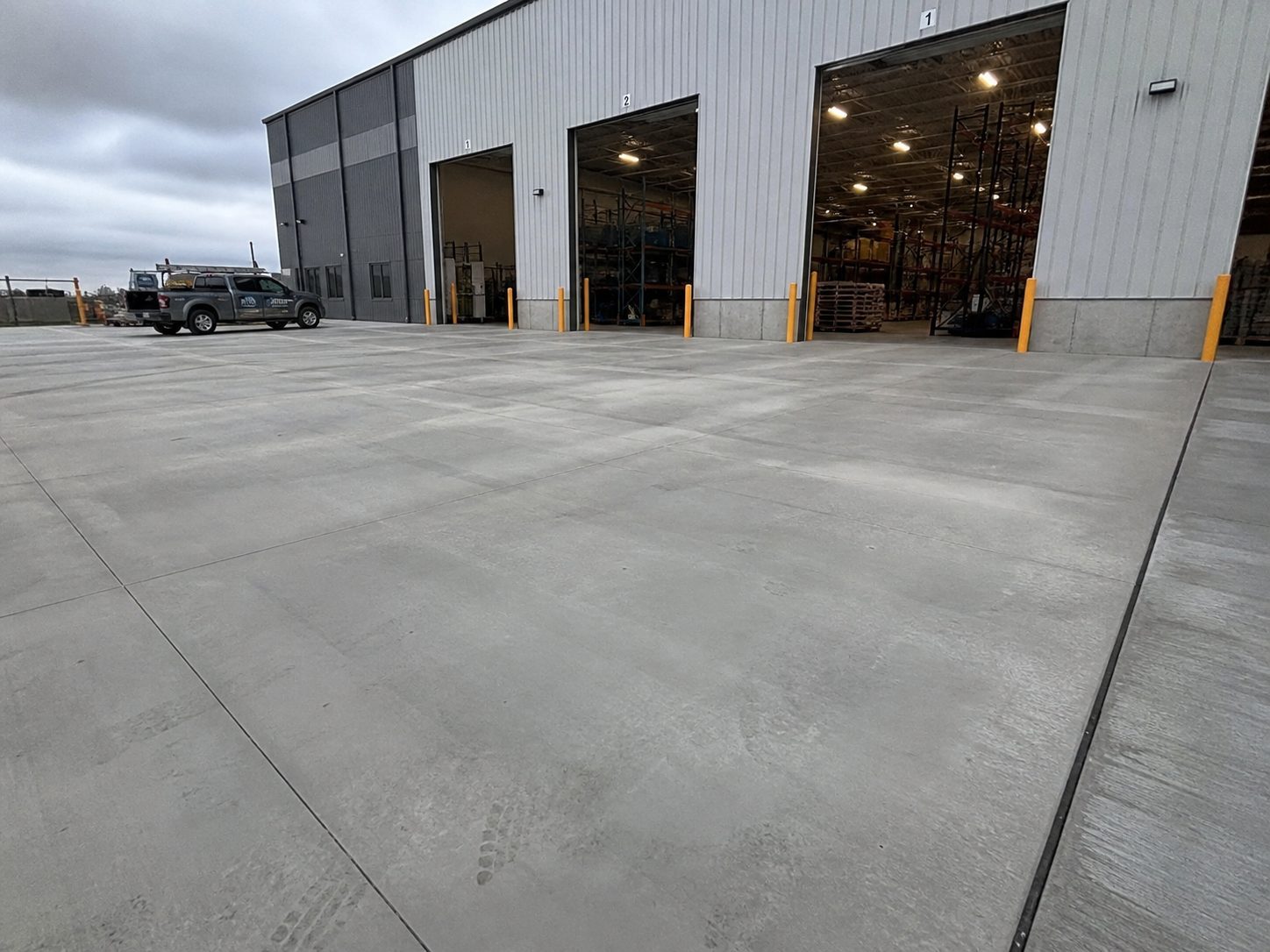
Standard warehouse and industrial floors in the KC metro run $4–7 per square foot for a basic slab-on-grade at 4,000 PSI with wire mesh reinforcement. Surface hardeners and high-flatness specs add $1–3 per square foot. A 10,000-sqft warehouse floor at standard spec runs $40,000–$70,000. Dock approach slabs are scoped separately as exterior concrete with different air-entrainment and drainage requirements.
- › Floor square footage
- › Slab thickness and PSI specification (4,000 PSI standard)
- › Reinforcement type (wire mesh, rebar, fiber reinforcement)
- › Surface hardener or polished concrete specification
- › Flatness tolerance requirement (F-number spec)
- › Dock approach design (exterior, air-entrained concrete)
What We Handle
Warehouse Floor Types, Surface Treatments, and Specifications
Standard Industrial Floor
4000 PSI slab-on-grade with wire mesh or fiber reinforcement. Appropriate for general storage, light distribution, and operations without demanding point loads.
Fiber-Reinforced Slab
Macro synthetic or steel fibers added to the mix replace or supplement traditional reinforcement for improved crack resistance and post-crack performance under load.
Surface Hardener
Dry-shake metallic or aggregate hardener troweled into fresh concrete creates a hard, wear-resistant surface. Substantially increases floor durability for forklift and heavy foot traffic operations.
Polished Concrete
Ground and polished to a specified sheen level. Highly durable, easy to clean, and appropriate for distribution, showroom, or food-service environments. Requires a well-prepared base slab.
Saw-Cut Control Joints
Control joints are cut within 24 hours of pour to direct where the slab cracks. Joint spacing in warehouse floors should account for rack layout and traffic patterns — random mid-bay cracking is worse operationally than planned joint lines.
FAQ
Common questions about this service.
If your question isn't here, call us. We'll give you a direct answer.
(816) 608-7761What thickness do I need for a warehouse floor with forklift traffic?
What's a floor flatness F-number?
Do you pour floors in sections?
How long before forklifts can use the new floor?
Can you repair sections of a deteriorated warehouse floor?
Service Areas
Warehouse & Industrial Floors across the eastern KC metro.
We handle warehouse & industrial floors in Lee's Summit and 11 surrounding cities. Each location has the same base-prep standards and KC-specified mix design.
Lee's Summit
Jackson County
Warehouse & Industrial Floors in Lee's Summit →Kansas City
Jackson / Clay / Platte Counties
Warehouse & Industrial Floors in Kansas City →Independence
Jackson County
Warehouse & Industrial Floors in Independence →Grain Valley
Jackson County
Warehouse & Industrial Floors in Grain Valley →Raymore
Cass County
Warehouse & Industrial Floors in Raymore →Belton
Cass County
Warehouse & Industrial Floors in Belton →Grandview
Jackson County
Warehouse & Industrial Floors in Grandview →Pleasant Hill
Cass County
Warehouse & Industrial Floors in Pleasant Hill →Harrisonville
Cass County
Warehouse & Industrial Floors in Harrisonville →Blue Springs
Jackson County
Warehouse & Industrial Floors in Blue Springs →Oak Grove
Jackson County
Warehouse & Industrial Floors in Oak Grove →Odessa
Lafayette / Jackson Counties
Warehouse & Industrial Floors in Odessa →Related Services